
Financial Calm & Control. Not Hype and Hustle.
Personal Finance Skills for Real Life
Confidence to Manage Money, for Life
Why MoneyPrudence?
MoneyPrudence ("MP") is designed as a high-quality, behaviour-led financial wellbeing and capability programme, delivered through a flexible and scalable operating model that can be adapted to the needs of different organisations, participant groups and geographies. The commercial approach seeks to balance quality, accessibility and sustainability, while maintaining the integrity of the participant experience.
Financial literacy is not about becoming wealthy overnight - it's about building life skills. MoneyPrudence helps young adults and families understand budgeting, cash flow, saving, investing, and risk in a practical, relatable way. Our mission is to make money education accessible, engaging, and relevant - so people can make confident choices throughout their lives.
How It Works
Deploy
Institutions integrate MoneyPrudence into their programs in minutes
Engage
Learners dive into bite-sized, gamified financial literacy modules
Track
Monitor engagement, completion rates, and knowledge retention in real-time
Impact
Measurable improvement in financial decision-making among participants
Key Features
Gamified Learning
Interactive game mechanics that make financial concepts engaging and memorable
Curriculum Aligned
Content mapped to financial literacy frameworks and learning objectives
Team Challenges
Collaborative modules that foster peer learning and healthy competition
Real-World Scenarios
Simulations based on real financial decisions young adults face daily
Post-Game Reinforcement
Structured follow-up on knowledge and behaviour change - clients choose the duration of post-programme engagement to embed lasting habits
A Glimpse Inside
A curated look at the flow - blending knowledge, behaviour and real-life decision making across multiple currencies and geographies.
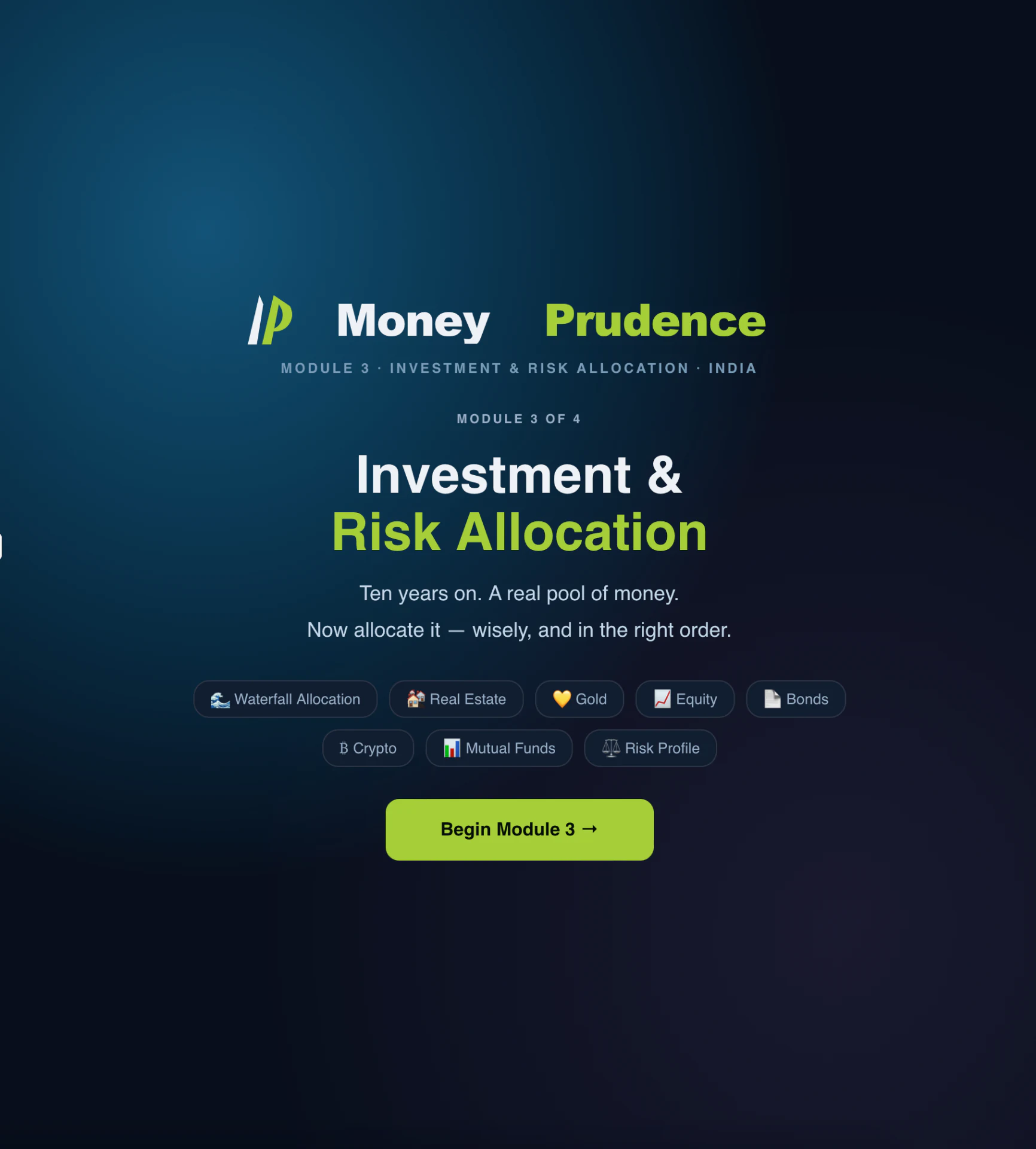
01
Module Opening
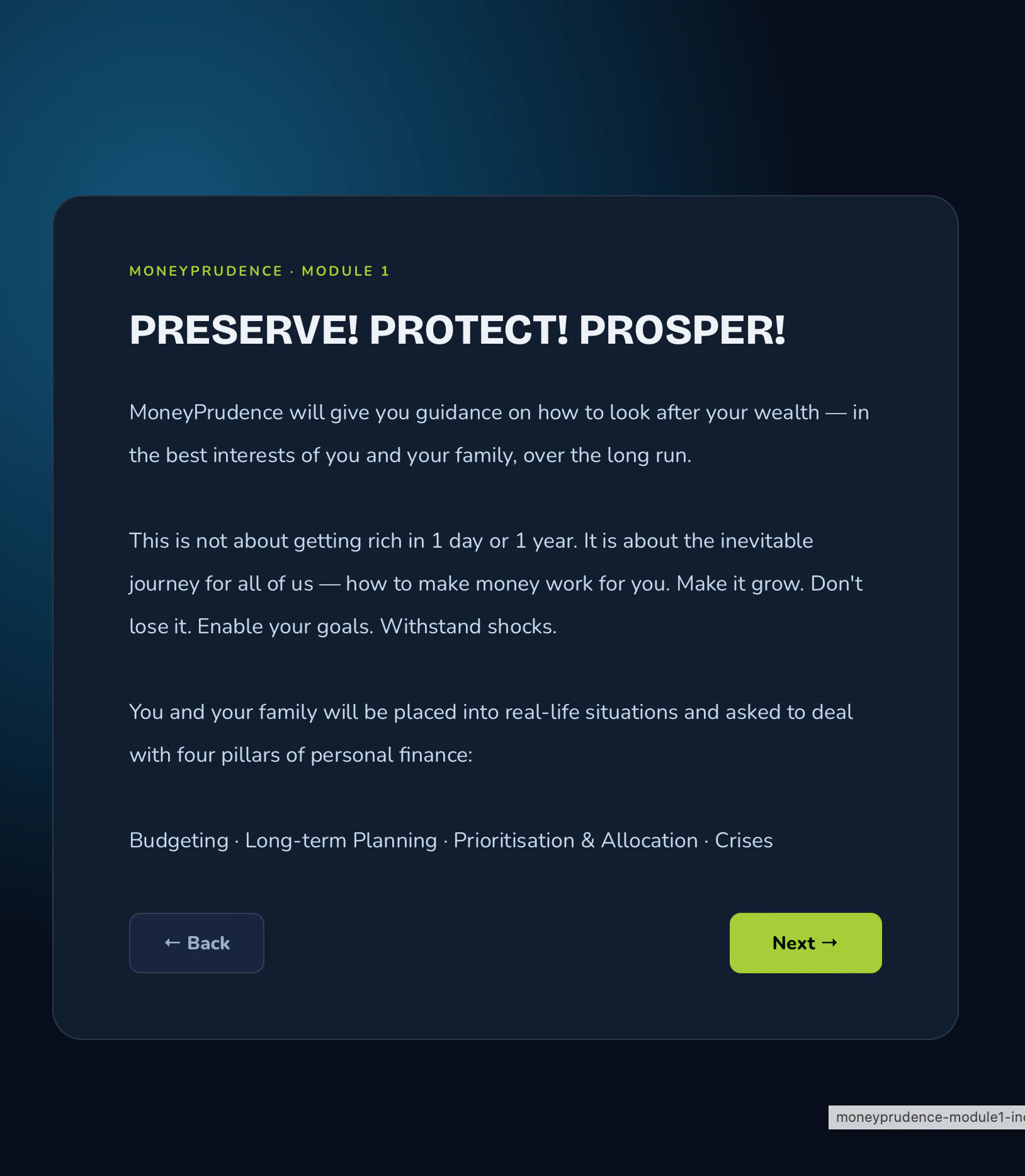
02
Setting the Scene
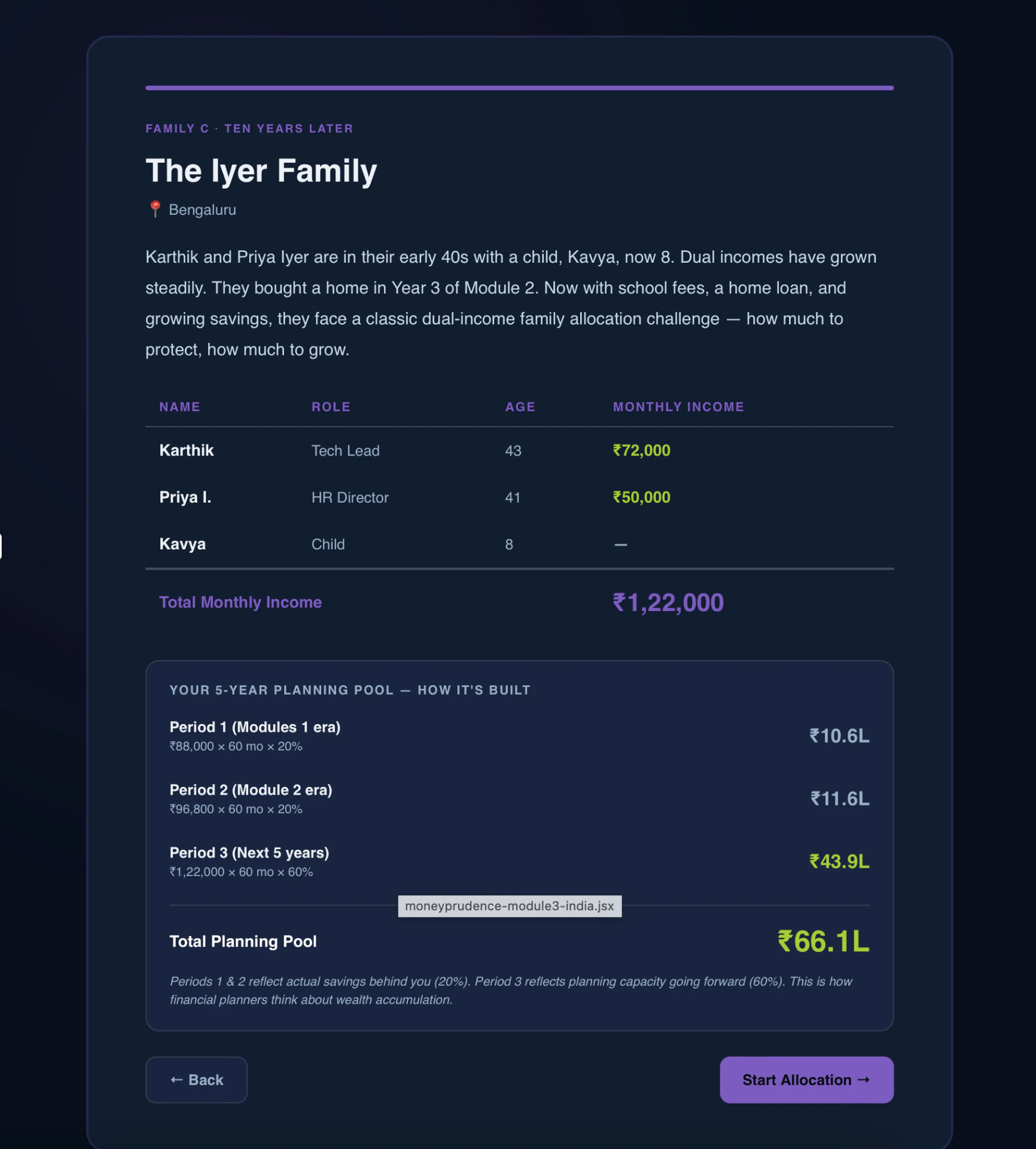
03
Family Context
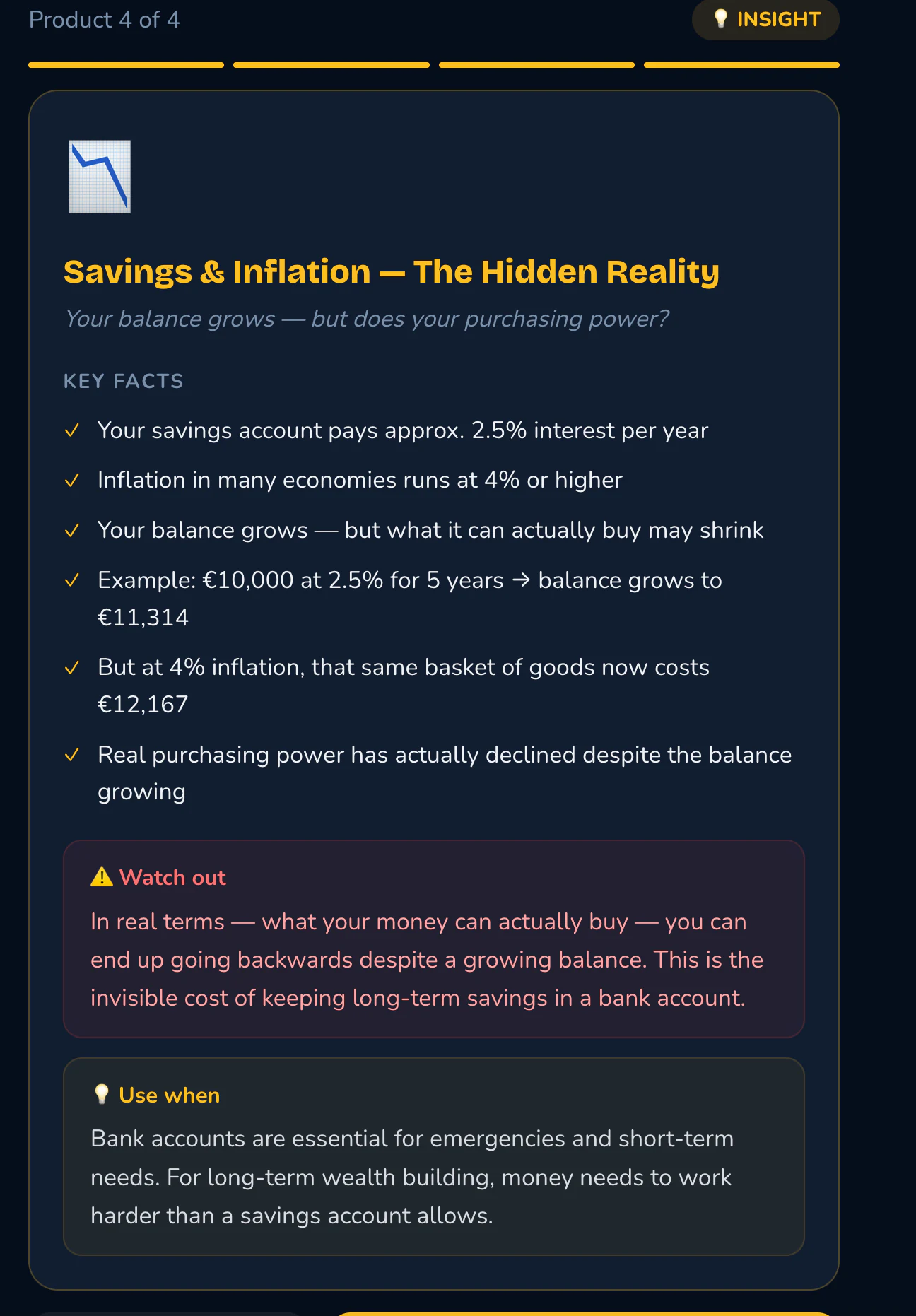
04
Knowledge Insight
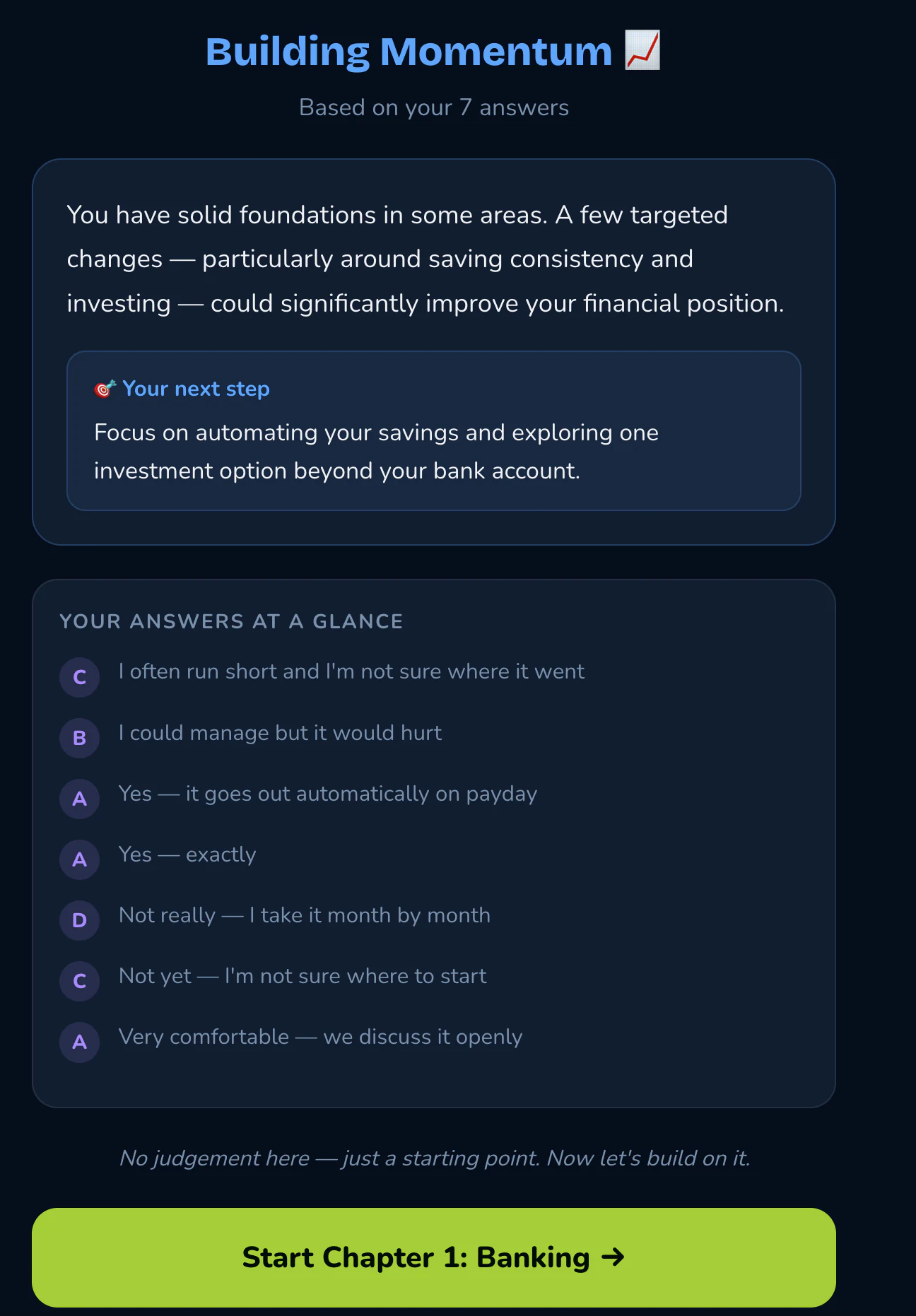
05
Personal Guidance
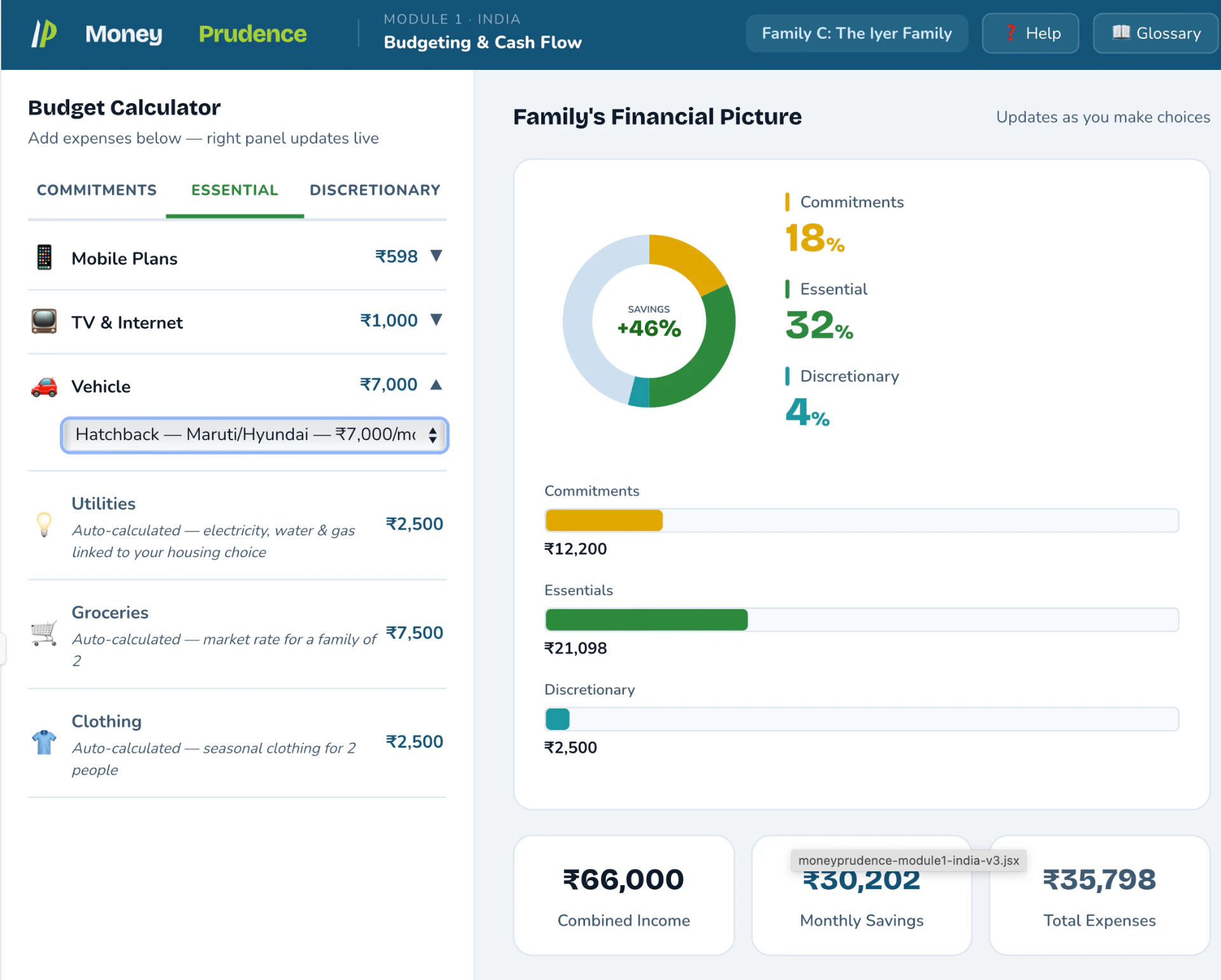
06
Live Decisions
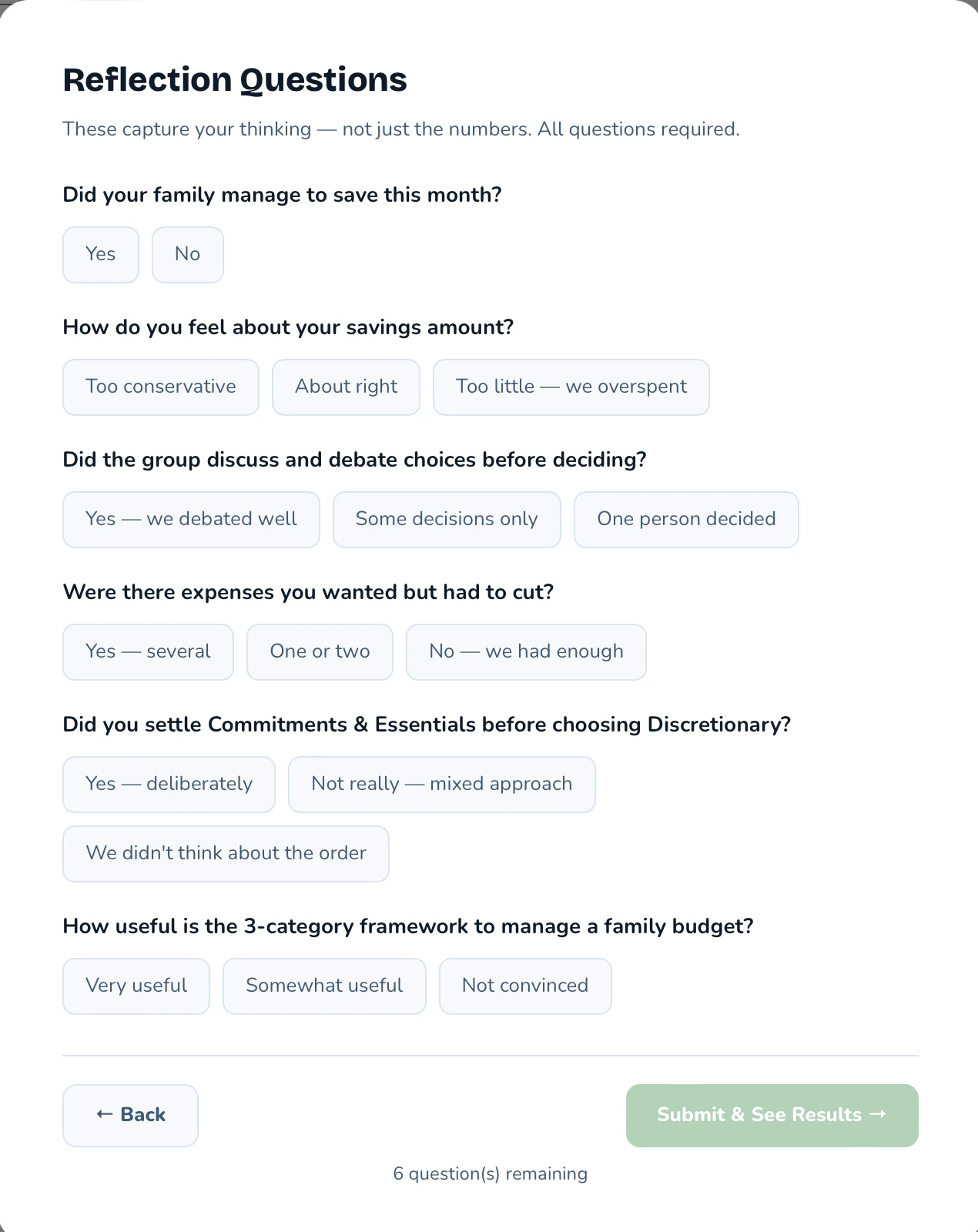
07
Behavioural Reflection
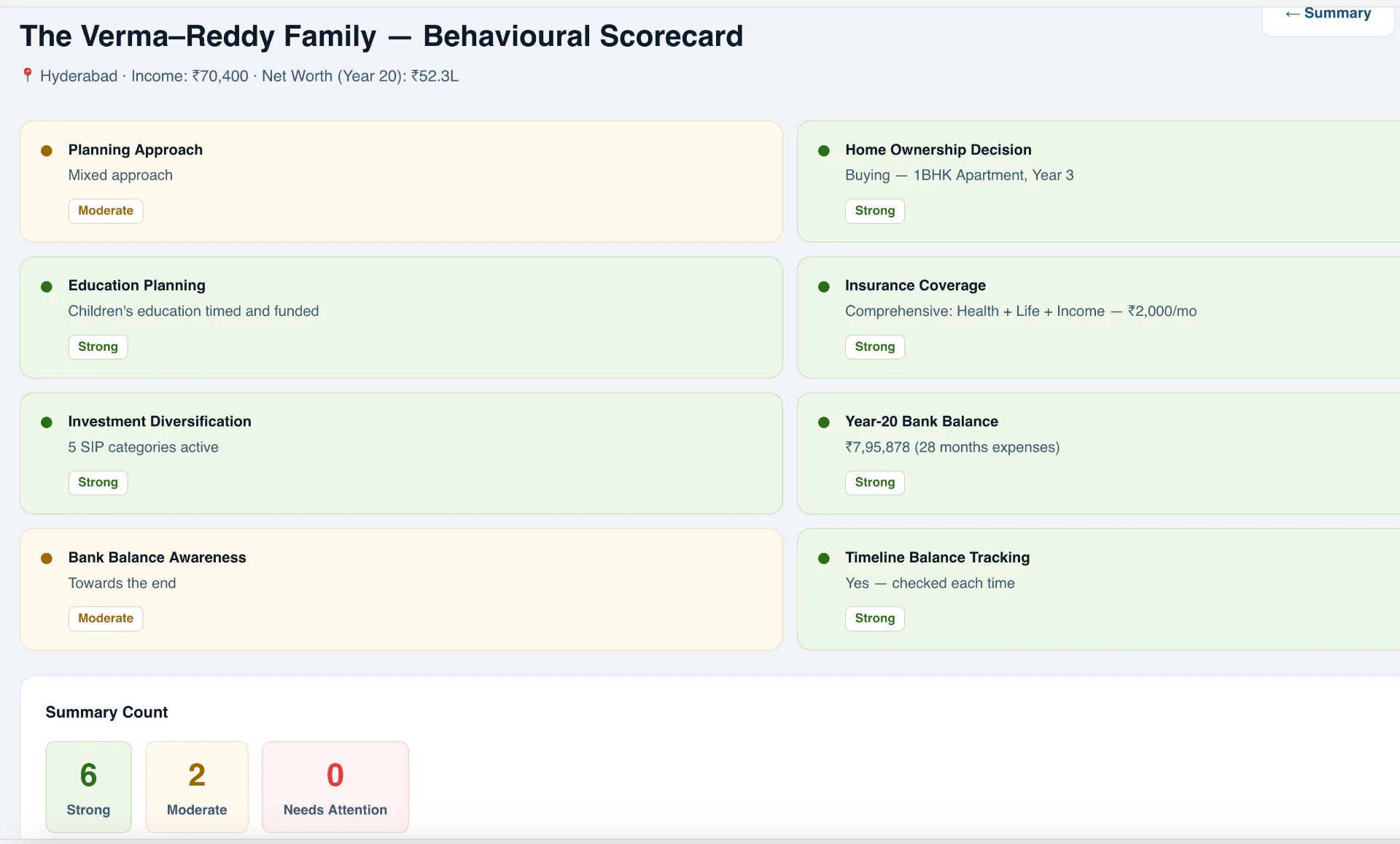
08
Behavioural Scorecard
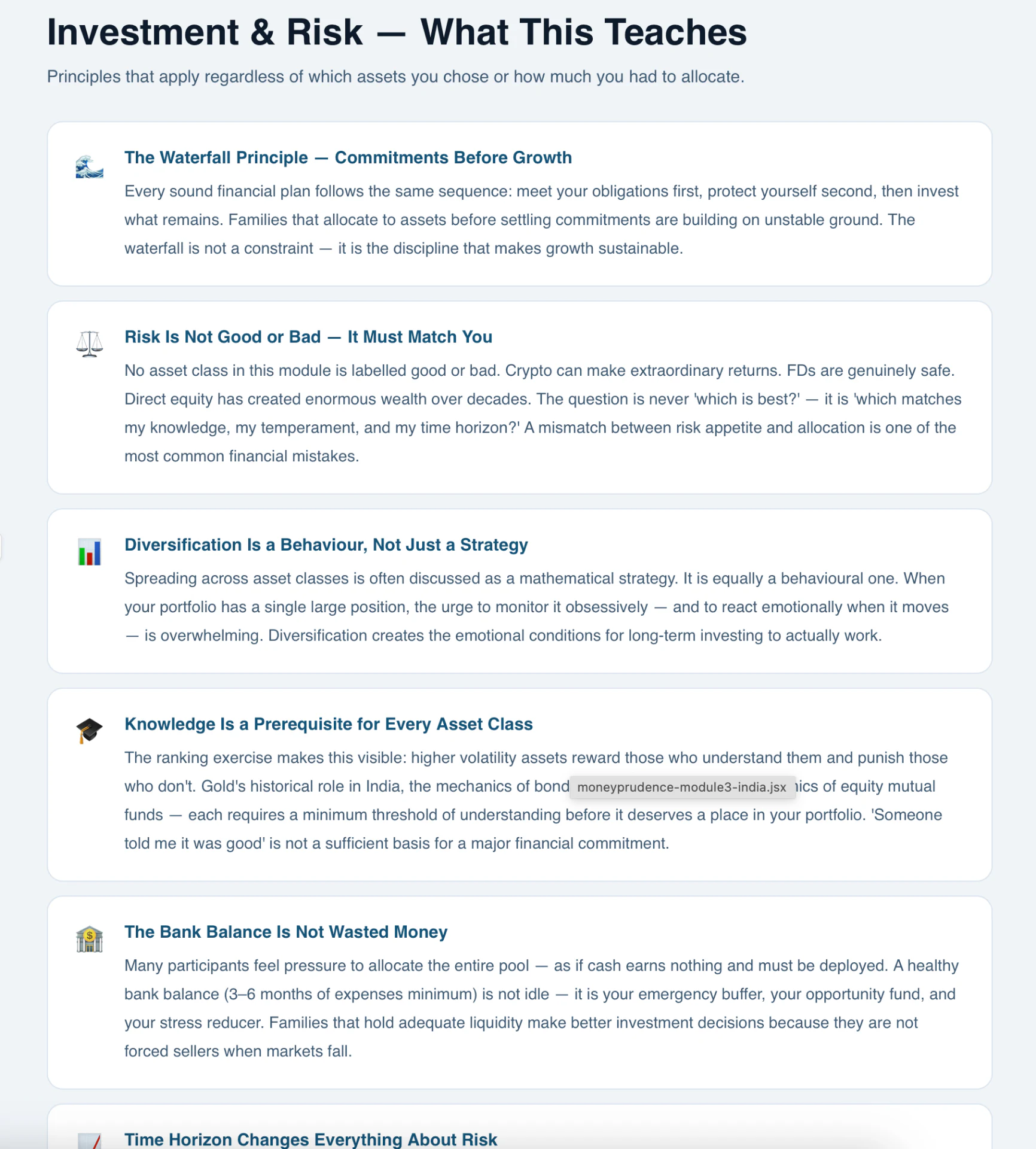
09
Lasting Principles
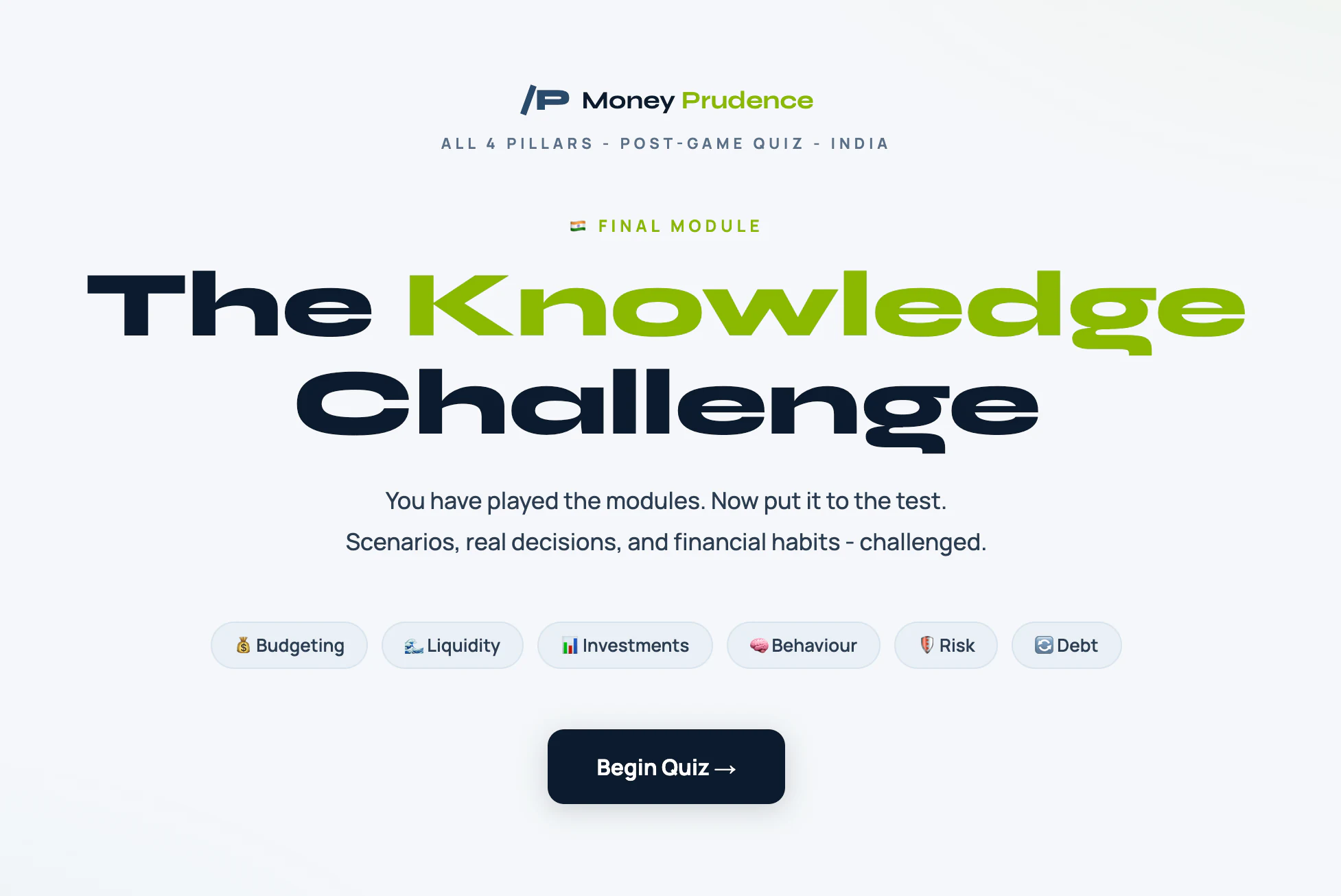
10
Knowledge Challenge
Swipe to browse all 10 screens, and tap any one for a closer look.Click any frame for a closer look.
"This first ever EU survey on financial literacy is a wake-up call for us and Member States: together we need to do more to improve levels of financial literacy in the EU."
— Mairead McGuinness, European Commission · EU
Eurobarometer Survey on Financial Literacy in the EU, July 2023
"All our evidence shows that a more widespread habit of regular saving would be transformational for the nation's financial wellbeing."
— Money and Pensions Service (MaPS) · UK
UK Savings Charter press release, 2024 - maps.org.uk
"Having £2,000 or more in savings is associated with a 60% reduction in the risk of a household falling behind with bills."
— HM Treasury / UK Government · UK
UK Financial Inclusion Strategy, November 2025 - gov.uk
"In a world of economic uncertainty, conflicts and climate upheaval, financial services are critical to help people control their lives and futures."
— Queen Máxima of the Netherlands, UNSGSA · NL
UN Secretary-General's statement, 79th UN General Assembly, September 2024
"Financial health means having the right financial tools to manage day-to-day expenses, build resilience to financial shocks, and invest in the future."
— Queen Máxima of the Netherlands, UNSGSA · NL
unsgsa.org, 2024
"Financial literacy is a combination of awareness, knowledge, skills, attitude and behaviour necessary to make sound financial decisions - it is not merely knowing a few concepts, it is being able to act on them."
— National Centre for Financial Education (NCFE) · India
National Strategy for Financial Education 2020-2025 (citing OECD)
"NSFI 2025-30 envisions upscaling financial inclusion towards seamless access to formal financial services, coupled with financial literacy, consumer awareness and customer protection."
— Reserve Bank of India (RBI) · India
National Strategy for Financial Inclusion 2025-2030, December 2025
"India faces a critical financial literacy gap. Early, multi-pronged interventions are essential - embedding financial literacy into school curricula, tools such as gamified learning, and community-based money management skills."
— World Economic Forum · India
WEF Agenda, September 2025 - weforum.org
"Interventions that take into account the contextual influences on behaviour - such as choice architecture, nudges, and just-in-time delivery - have proven more effective than traditional financial education approaches alone."
— Financial Consumer Agency of Canada (FCAC) · Canada
Make Change That Counts: National Financial Literacy Strategy 2021-2026
"Adults who score high on financial literacy also have higher levels of financial well-being and financial resilience than adults who scored low."
— OECD · Global
OECD/INFE 2023 International Survey of Adult Financial Literacy
"Financial literacy is not just an abstract concept; it influences tangible financial behaviours and outcomes - people with higher financial literacy are more likely to plan for retirement, accumulate wealth, and avoid costly mistakes."
— Prof. Annamaria Lusardi & Prof. Olivia Mitchell · Global
Journal of Economic Perspectives, Vol. 37(4), Fall 2023
"Financially stressed workers lose 11 to 14 hours of work time in a month. A 500-person Indian organisation with 15% turnover from financial dissatisfaction is incurring ₹5-10 crores in replacement costs."
— NASSCOM / SHRM India · India
Helping Employees Navigate Financial Stress in 2026 - shrm.org/in
"A sustainable, inclusive financial ecosystem should be built by clearly outlining each participant's role and motivating their involvement through gamification and measurable goals."
— EY India / Confederation of Indian Industry (CII) · India
Financial Inclusion through Technology and Literacy in India, 2024
"Young people express a clear preference for gamified, interactive, and experiential approaches - they want to practise with real financial products and access information through schools and workplaces."
— London Foundation for Banking & Finance (LFBF) · UK
Accelerating Progress: Financial Education in the UK, January 2025
"The financial wellness of First Nations individuals, families and communities is shaped by a mix of personal, institutional and community factors - including history, policy and culture. Programmes must be community-directed, strength-based, and grounded in the lived realities of the people they serve."
— Prosper Canada & AFOA Canada · Canada / First Nations
The Shared Path: First Nations Financial Wellness, 2019 - prospercanada.org
"Simply encouraging young women to reflect on and discuss their finances can significantly enhance their financial confidence and promote positive financial behaviours. Financial literacy interventions must take a gender-based approach to effectively enhance inclusion."
— Financial Consumer Agency of Canada (FCAC) · Canada
From Clicks to Confidence, Final Research Report, FCAC, March 2025
"This first ever EU survey on financial literacy is a wake-up call for us and Member States: together we need to do more to improve levels of financial literacy in the EU."
— Mairead McGuinness, European Commission · EU
Eurobarometer Survey on Financial Literacy in the EU, July 2023
"All our evidence shows that a more widespread habit of regular saving would be transformational for the nation's financial wellbeing."
— Money and Pensions Service (MaPS) · UK
UK Savings Charter press release, 2024 - maps.org.uk
"Having £2,000 or more in savings is associated with a 60% reduction in the risk of a household falling behind with bills."
— HM Treasury / UK Government · UK
UK Financial Inclusion Strategy, November 2025 - gov.uk
"In a world of economic uncertainty, conflicts and climate upheaval, financial services are critical to help people control their lives and futures."
— Queen Máxima of the Netherlands, UNSGSA · NL
UN Secretary-General's statement, 79th UN General Assembly, September 2024
"Financial health means having the right financial tools to manage day-to-day expenses, build resilience to financial shocks, and invest in the future."
— Queen Máxima of the Netherlands, UNSGSA · NL
unsgsa.org, 2024
"Financial literacy is a combination of awareness, knowledge, skills, attitude and behaviour necessary to make sound financial decisions - it is not merely knowing a few concepts, it is being able to act on them."
— National Centre for Financial Education (NCFE) · India
National Strategy for Financial Education 2020-2025 (citing OECD)
"NSFI 2025-30 envisions upscaling financial inclusion towards seamless access to formal financial services, coupled with financial literacy, consumer awareness and customer protection."
— Reserve Bank of India (RBI) · India
National Strategy for Financial Inclusion 2025-2030, December 2025
"India faces a critical financial literacy gap. Early, multi-pronged interventions are essential - embedding financial literacy into school curricula, tools such as gamified learning, and community-based money management skills."
— World Economic Forum · India
WEF Agenda, September 2025 - weforum.org
"Interventions that take into account the contextual influences on behaviour - such as choice architecture, nudges, and just-in-time delivery - have proven more effective than traditional financial education approaches alone."
— Financial Consumer Agency of Canada (FCAC) · Canada
Make Change That Counts: National Financial Literacy Strategy 2021-2026
"Adults who score high on financial literacy also have higher levels of financial well-being and financial resilience than adults who scored low."
— OECD · Global
OECD/INFE 2023 International Survey of Adult Financial Literacy
"Financial literacy is not just an abstract concept; it influences tangible financial behaviours and outcomes - people with higher financial literacy are more likely to plan for retirement, accumulate wealth, and avoid costly mistakes."
— Prof. Annamaria Lusardi & Prof. Olivia Mitchell · Global
Journal of Economic Perspectives, Vol. 37(4), Fall 2023
"Financially stressed workers lose 11 to 14 hours of work time in a month. A 500-person Indian organisation with 15% turnover from financial dissatisfaction is incurring ₹5-10 crores in replacement costs."
— NASSCOM / SHRM India · India
Helping Employees Navigate Financial Stress in 2026 - shrm.org/in
"A sustainable, inclusive financial ecosystem should be built by clearly outlining each participant's role and motivating their involvement through gamification and measurable goals."
— EY India / Confederation of Indian Industry (CII) · India
Financial Inclusion through Technology and Literacy in India, 2024
"Young people express a clear preference for gamified, interactive, and experiential approaches - they want to practise with real financial products and access information through schools and workplaces."
— London Foundation for Banking & Finance (LFBF) · UK
Accelerating Progress: Financial Education in the UK, January 2025
"The financial wellness of First Nations individuals, families and communities is shaped by a mix of personal, institutional and community factors - including history, policy and culture. Programmes must be community-directed, strength-based, and grounded in the lived realities of the people they serve."
— Prosper Canada & AFOA Canada · Canada / First Nations
The Shared Path: First Nations Financial Wellness, 2019 - prospercanada.org
"Simply encouraging young women to reflect on and discuss their finances can significantly enhance their financial confidence and promote positive financial behaviours. Financial literacy interventions must take a gender-based approach to effectively enhance inclusion."
— Financial Consumer Agency of Canada (FCAC) · Canada
From Clicks to Confidence, Final Research Report, FCAC, March 2025
Ready to Transform Financial Education?
Partner with MoneyPrudence to bring engaging financial literacy to your learners.
Get in Touch